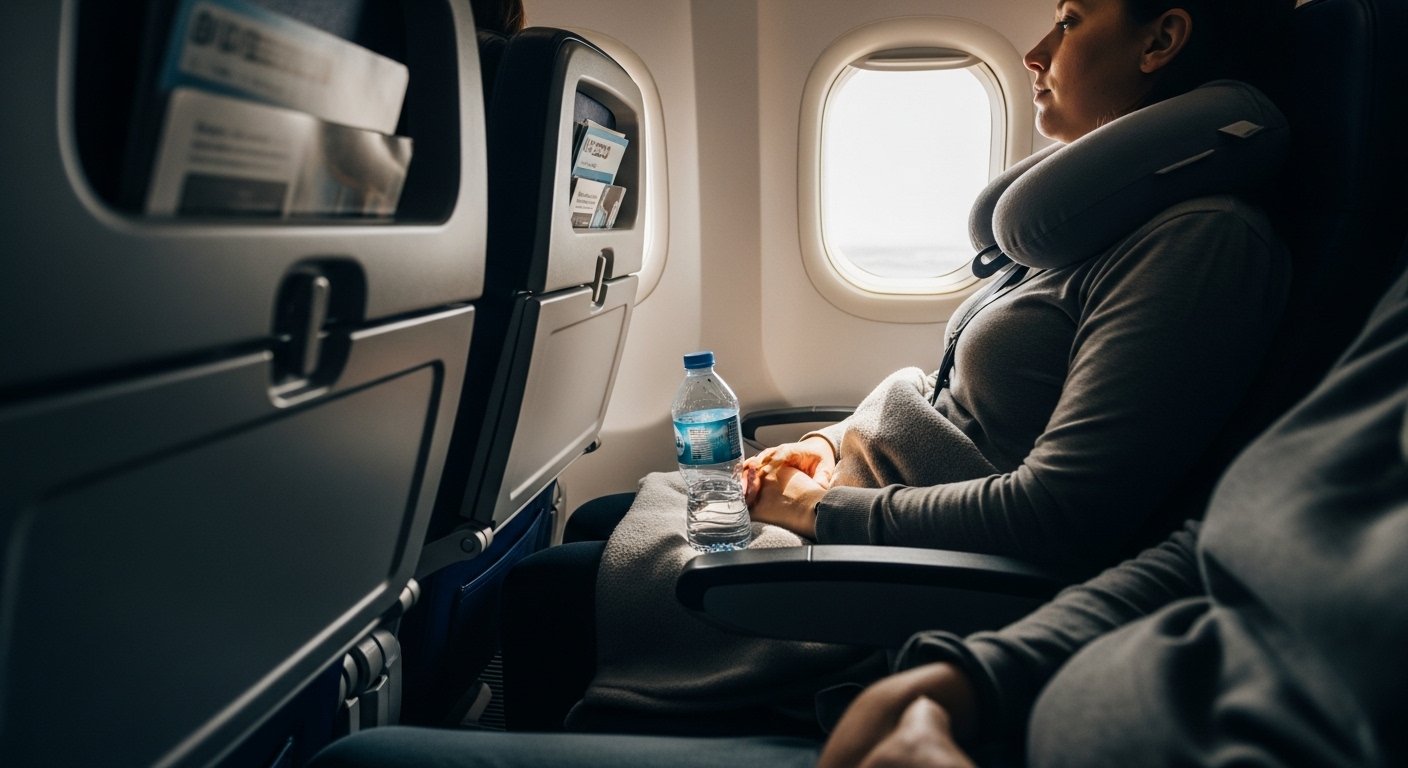
I remember that 14-hour flight to Sydney. My back ached from the start. Knees bumped the seat ahead. I couldn't sleep or stretch. The whole trip felt off before we landed.
That changes with small choices. I've flown enough long hauls to know.
Now, I land feeling steady. Rested enough to start the day.
How To Stay Comfortable On Long Flights With Simple Tips
These are the tips I use on every long flight. You'll learn how to settle in, rest, and arrive without that drained feeling. It's practical. You end up calm and ready.
What You’ll Need
- Gray memory foam neck pillow
- Black silk eye mask
- Navy compression socks medium size
- Lightweight travel blanket microfleece
- Reusable insulated water bottle 32 oz
- Soft foam earplugs high NRR
- Noise-canceling over-ear headphones black
Step 1: Dress in Layers for the Cabin Chill
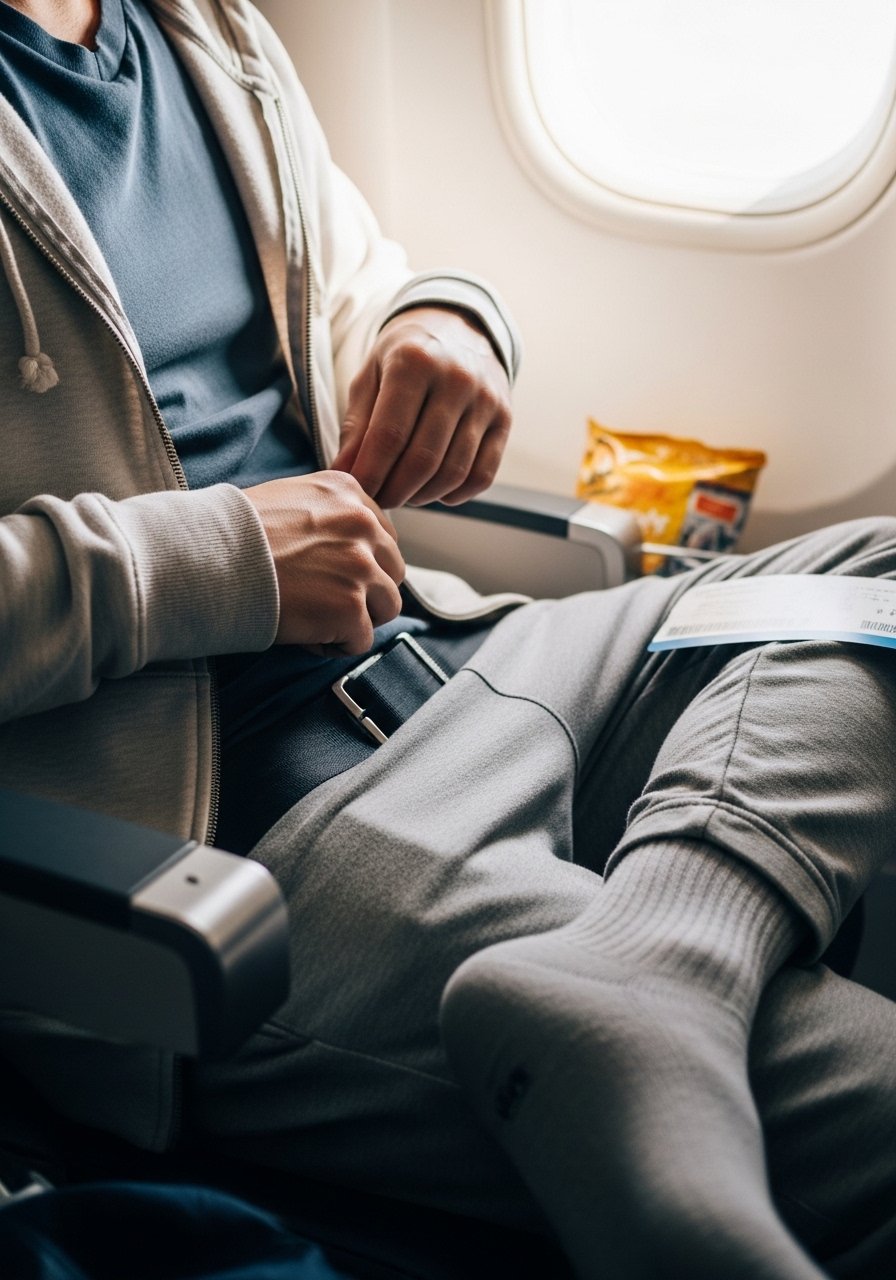
I always wear loose pants and a hoodie. Socks that compress my calves. No jeans—they pinch after hours.
This keeps blood flowing. Cabin air drops 10 degrees mid-flight. Layers let me adjust without freezing or sweating.
People miss how clothes affect sleep. Tight waistbands wake you up. Avoid belts. I pack slippers too. Feet swell otherwise.
Once dressed right, the seat feels like mine. I settle faster.
Step 2: Claim and Organize Your Seat Space
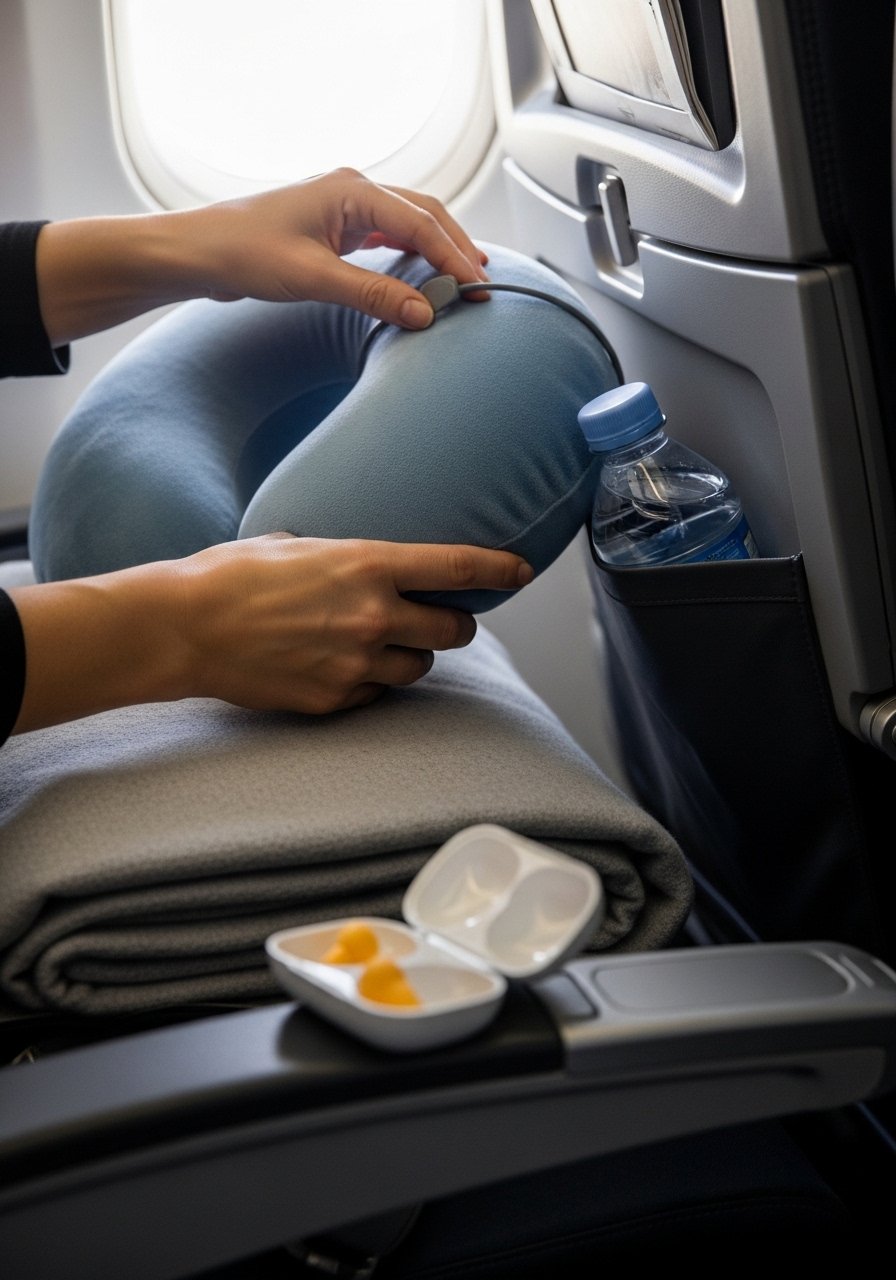
Right after boarding, I wedge the neck pillow behind my lumbar. Blanket over legs. Water bottle in the pocket.
This creates a nest. No reaching over strangers. Everything's within arm's reach.
Most forget the armrest game. I claim one early. It adds inches. Don't wait—neighbors will.
My space feels contained now. Less jostled. I lean back without tension.
Step 3: Hydrate Before Thirst Hits
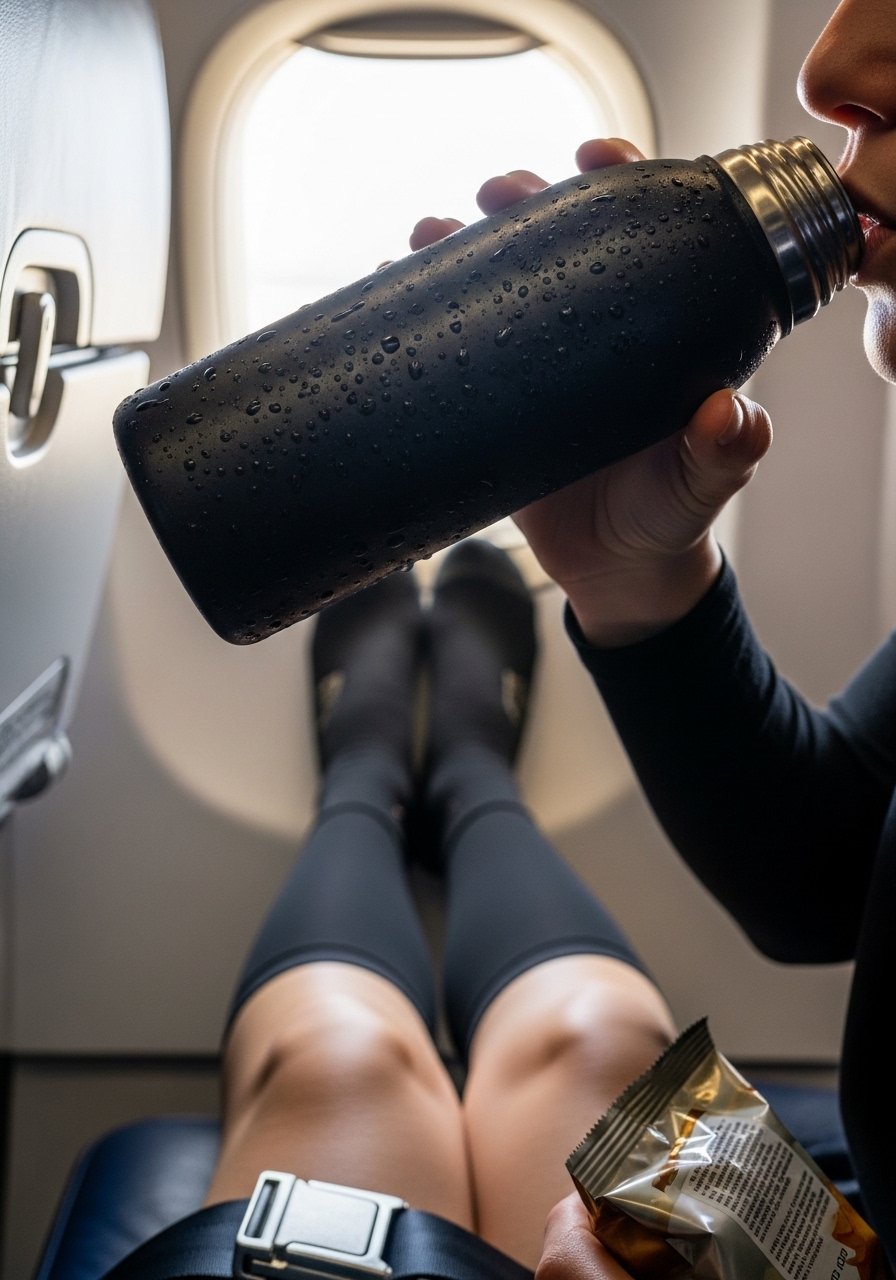
I drink 8 ounces hourly. Fill my bottle at security. Skip the tiny cups—they're warm.
Dry air pulls moisture fast. You feel it in your eyes first. Steady sips keep sinuses clear.
The miss: caffeine creeps in. Coffee worsens it. I switch to herbal tea bags I pack.
Legs stay less puffy. Skin doesn't itch. I notice the difference by hour four.
Step 4: Move Every Hour on the Hour
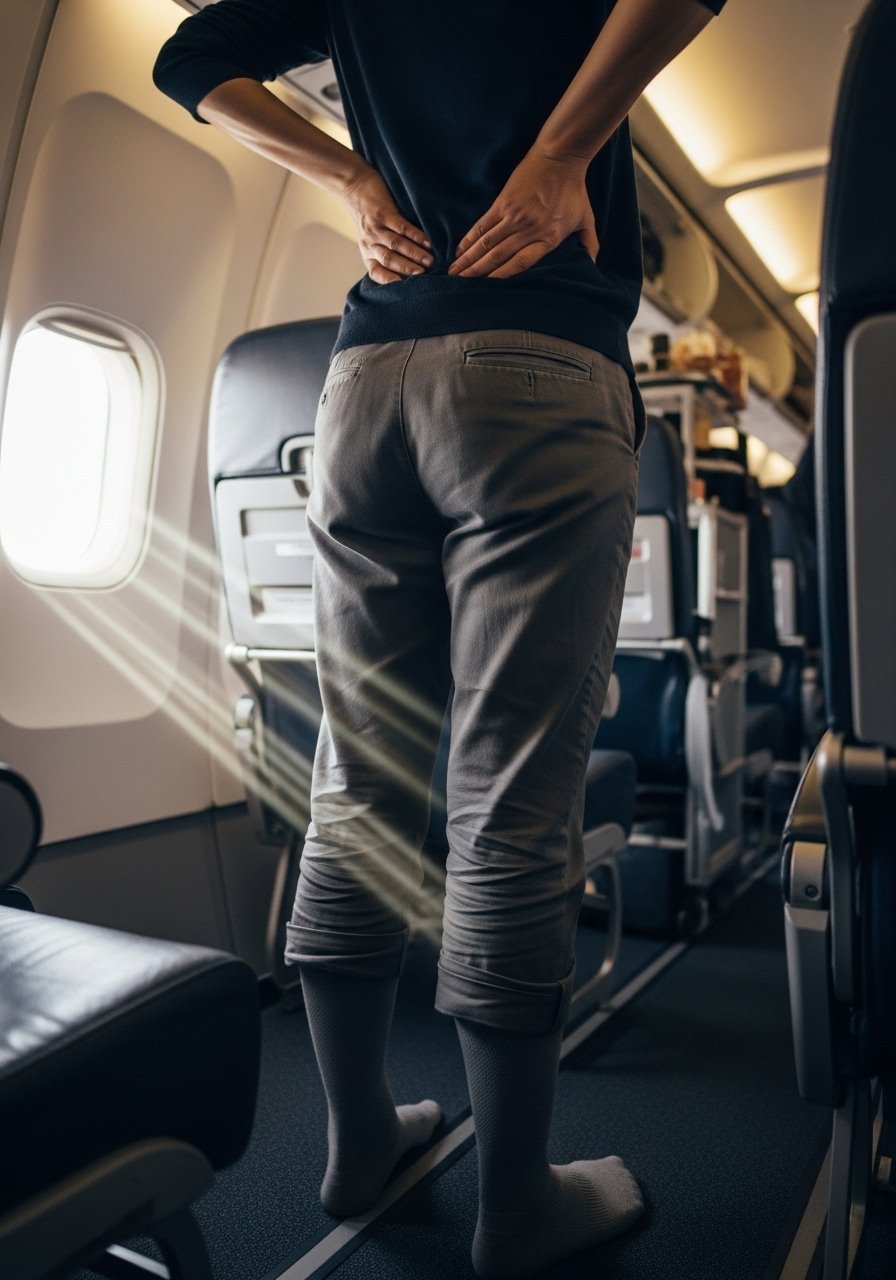
Set your phone for 60-minute walks. Stand, circle ankles, touch toes in place.
Cabin pressure stiffens joints. Short moves loosen them. Blood circulates better.
Folks wait too long. Then swelling locks you in. Start at 30 minutes if you're prone.
I return looser. Seat feels better. No pins after landing.
Step 5: Block Out the Noise for Real Rest
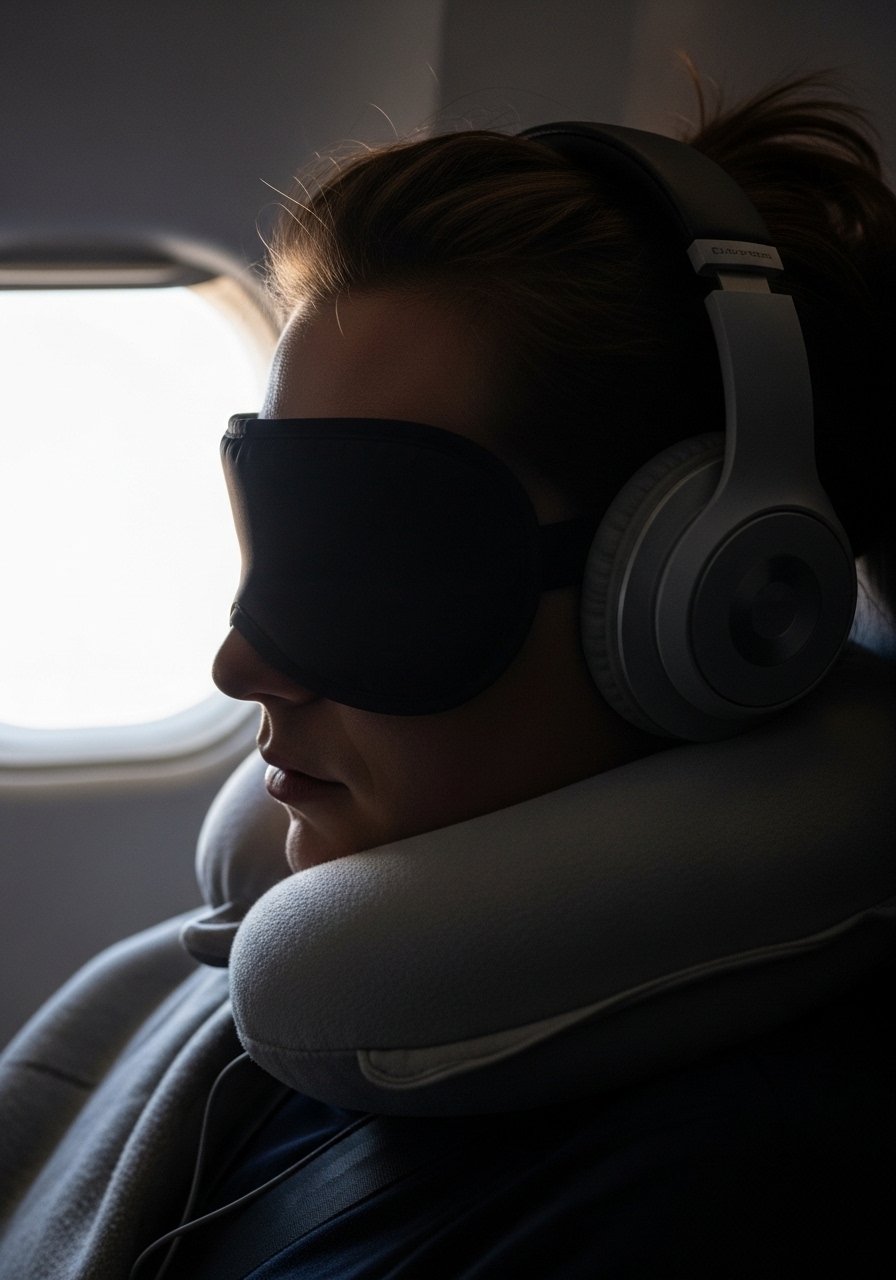
Earplugs first, then headphones. Eye mask last. I dim my screen early.
Noise builds—engines, chats, cries. Layers block it all.
Common skip: relying on one. Full combo lets me nap two hours straight.
I wake clearer. Time passes easier. Jet lag hits softer.
Handling Dry Cabin Air
Cabin air sucks moisture. I learned that on a dry run to Asia.
Eyes burn first. Skin tightens.
- Mist face hourly with a spray bottle I refill.
- Lip balm in pocket—reapply often.
- Nasal saline drops before sleep.
This keeps me from cracking. Simple habit.
Choosing the Best Economy Seat
Window for leaning. Aisle for moves. Avoid middle.
I book window 24 hours out. Legs against wall.
Bulkhead has space—but no floor.
Check SeatGuru app. Marks tight spots.
Pays off every time.
Smart Snacks for Steady Energy
Airplane food sits heavy. I pack nuts and fruit.
Protein bars too—but chewy ones.
- Almonds: 20 grams handful.
- Apple slices in bag.
- Dark chocolate square.
No sugar crashes. Hunger stays away.
Final Thoughts
Start with layers and water next flight. Build from there.
These tips stack up quiet. You'll feel the shift.
Long hauls turn bearable. You land as yourself. Worth the prep.
Leave a Reply